
Our take on the Budget
Our policy and public affairs team look at the budget and how it will impact on families with disabled and seriously ill children.
On Wednesday the Chancellor of the Exchequer Rachel Reeves announced the Government’s new Budget plans. Family Fund’s policy and public affairs team have been looking at the budget to see how the policies in it will affect families with disabled or seriously ill children and young people.
One of our key concerns is the financial security of families, the extra costs that families with disabled children face, and the challenges that so many face in being able to afford the things they need, or in making ends meet. We know from The Cost of Caring 2025 research and Family Polls, that the rising cost of living has put families under increasing pressure. So we’re pleased to see the Chancellor announce measures that will help families.
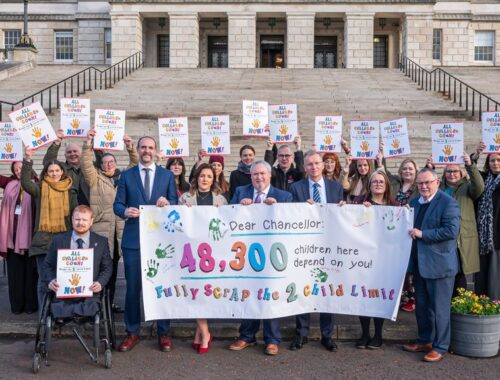
The big headline news of the budget this year is the lifting of the two-child benefit limit from April 2026, something that Family Fund campaigned on with many other organisations. This affects 129,630 households with at least one disabled child. Now, families on Universal Credit can claim the child element for all their children, not just the first two. This is most welcome in England, Wales and Northern Ireland. Scottish Government had already planned to mitigate the policy with the introduction of a Two Child Limit Payment in March 2026. Funding allocated to deliver this support will now be invested in other measures to tackle child poverty.
Parents claiming Universal Credit will also be able to claim more of their childcare costs. Though as parents in The Cost of Caring 2025 pointed out, this may not make much difference for those who can’t find the childcare they need. The Budget included an announcement of a review of childcare provision. Family Fund will work with policy makers to bring the voices and experiences into the review.
Also from 1 April next year, the Universal Credit Standard Allowance, or basic rate, will increase by over 6%. For a single person aged 25 or over that means around £295 extra a year. For couples where one partner is aged 25 or over, that means £465 more per year. The National Living Wage is also going up from April, to £12.71 per hour.
Meanwhile, energy bills will reduce next year, with the average household bill going down by £150. We know this will be welcome news to families with disabled children who struggle with energy costs, often having higher needs for heating and powering specialist equipment. Families will also be glad to hear that prescription charges are to be frozen for a year.
The Chancellor also announced a few measures that we know will be helpful, but that we would like to see go a little further. It’s good to hear that the Help to Save Scheme will be extended to people on Universal Credit getting the child element or the caring element. But, as the Cost of Caring 2025 survey showed, many families with disabled children may not benefit from this as they struggle just to make their income stretch to cover daily needs, and many are in debt. Through our surveys, we’ll continue to check in with families to understand the extent to which the wider changes to benefits and energy bills improve their financial position and potentially allow them to save a little.
Similarly, we welcome the announcement of £18 million for 200 new playgrounds. We believe all children have the right to play safely and creatively, and we will be working with partners and families to make sure that these new playgrounds are fully accessible to families with disabled children. But we also know that many children with severe mobility difficulties, and additional needs, need opportunities to learn and be creative through other kinds of play. Family Fund has been developing and working with others on digital play across the four nations of the UK, and we’ll continue to do this – check out our Discover Digital workshops and follow us on social media to find out more.
The budget also includes references to the England SEND review that will come out in Spring 2026. We’ll be keeping a close eye on this, along with partner organisations, and we’ll share more information about the review, and ways to engage with it, as they become available.
As we go forward next year, the policy and public affairs team at Family Fund will continue to work with partners on these and other issues. We’ll create and share opportunities for families to speak directly about their experiences, through our surveys and research, and in other ways. We will work with policymakers to learn from the voices and experiences of families with disabled or seriously ill children and young people.